Catégories
Le guide du parfait biscuit
Retour aux recettes et plusPrincipaux types de biscuits | Description | Recettes |
|---|---|---|
Biscuit de base | Les débutants commencent souvent par ce type de biscuits, qu'on fait cuire en déposant simplement des boules de pâte sur une plaque à biscuits. | Biscuits à l’avoine et aux pépites de chocolat |
Barres | Fabriqués en étalant ou en pressant la pâte à biscuits dans un moule avant la cuisson. Une fois cuits, ils sont découpés en barres ou en carrés. | Barres avec ganache à la menthe poivrée |
Biscuits moulés | Faits à partir d'une pâte ferme et habituellement façonnés à la main ou à l'aide de moules avant la cuisson. | Biscuits boules de neige aux amandes |
Biscuits roulés | Cette pâte est habituellement refroidie puis abaissée à l'aide d'un rouleau à pâte. On utilise des emporte-pièces pour découper des formes avant la cuisson. Ces biscuits sont souvent décorés avec du glaçage royal ou des crystaux de sucre. | Biscuits au chocolat à l’emporte-pièce |
Biscuits au réfrigérateur | Cette pâte est plus ferme que celle des biscuits de base. Elle est façonnée en bûche, emballée dans du cellophane puis refroidie durant plusieurs heures au réfrigérateur ou au congélateur. La bûche est ensuite coupée en tranches avant d'être cuite. | Salami au chocolat, aux fruits et aux noix |
Biscuits à la poche | Faits à partir d'une pâte souple que l'on met dans une poche à douille décorative ou dans une presse à biscuits pour créer diverses formes. | |
Gaufrettes | Faites à partir d'une pâte assez liquide, généralement à base de mousse d'œuf, elles sont étalées sur une plaque de cuisson à l'aide d'une cuillère, versées, étalées à l'aide d'une spatule coudée ou moulées au pochoir avant d'être cuite. Ces biscuits sont souvent cuits jusqu'à ce qu'ils soient dorés et peuvent être façonnés en différentes formes pendant qu'ils sont encore chauds. Les tuiles, par exemple, sont souvent façonnées au rouleau à pâtisserie ou dans des tasses pour créer une forme incurvée. Connus pour leur texture délicate et légère, ces biscuits sont généralement servis en accompagnement de desserts ou de glaces. | Tuiles dentelles parfumées à l’orange |
Why are my cookies flat and greasy?
The most common reason is the use of too much fat and too little flour.
Solution:
Ensure all ingredients are measured accurately or use a scale for precision.
Why do my cookies spread too much?
Cookies that spread too much may lack enough flour to give structure.
The butter is too warm or melted when mixed into the dough.
If the oven is not hot enough, this can cause the cookies to spread before the edges have a chance to set.
Solution:
-
Measure all the ingredients properly or use a scale for precision.
-
Chill the dough in the fridge before scooping and placing it into the oven.
-
Use parchment paper or a silicone mat instead of a greased pan to increase adhesion.
-
Make sure your oven is preheated to the correct temperature.
Why do my cookies not spread?
A primary reason may be there is not enough butter or too much flour was added to the recipe.
The oven is too hot, which can cause the edges of the cookies to set before they have a chance to spread.
Old or expired leavening agents, such as baking soda or baking powder, may not produce enough gas to cause the dough to spread.
Solution:
Ensure all ingredients are measured accurately or use a scale.
Make sure your oven is preheated to the correct temperature.
Measure the flour correctly by spooning it into the measuring cup and leveling it off without packing it down.
Test the potency of your leavening agents. Read Baking Soda vs. Baking Powder article for tips and storage.
Why do my cookies deflate after baking?
Overwhipping the butter and sugar may incorporate too much air into the dough, causing the cookies to rise quickly and then deflate after baking.
Using too much leavening agent can also cause cookies to rise and fall after baking.
Removing cookies from the oven too soon may leave them underbaked. While they puffed up initially, they will deflate as they cool.
Solution:
Ensure all ingredients are measured accurately or use a scale.
Bake until cookies are just done according to the recipe's instructions.
Why do my cookies fall apart after baking? Why are my cookies dry and cakey?
Cookies that spread too much may lack enough flour to give structure.
The butter is too warm or melted when mixed into the dough.
Undermixing the dough may unevenly distribute ingredients which can create structurally weak spots in the cookies.
If the oven is not hot enough, this can cause the cookies to spread before the edges have a chance to set.
Solution:
Measure all the ingredients properly or use a scale.
Mix the dough until no flour streaks remain.
Make sure your oven is preheated to the correct temperature.
Why do my cookies taste like flour?
The likely reason is using too much flour which can occur if you measure the flour incorrectly or add too much flour when rolling out the dough.
The type of flour used can also affect the taste. Flour with a higher protein content, like bread flour, can result in a chewier texture and a more dominant flour taste.
Insufficient flavouring, such as vanilla extract and spices, can lead to tasteless cookies where the flour taste is more prominent.
Solution:
Ensure all the ingredients are measured accurately or use a scale.
Make sure to measure the flour correctly by spooning it into the measuring cup and leveling it off without packing it down.
Use the correct type of flour. Most cookie recipes call for all-purpose flour.
Add an adequate amount of flavourings.
Why are my cookies sticky after baking?
Too much sugar in the cookie dough can lead to cookies that are sticky.
A sticky dough can be a result of adding too much of a wet ingredient (eg. eggs, butter, or a liquid).
Solution:
Ensure all the ingredients are measured accurately or use a scale.
Why do my cookies taste bitter? Why do my cookies taste like baking soda?
The bitter taste may result from using too much baking soda or baking powder in the recipe, as both ingredients are alkaline and can affect the flavour of your cookies.
Acidic ingredients (like brown sugar, lemon juice, or yogurt) help neutralize the bitterness of the leavening agents. Insufficient quantities can result in residues of leavening agents giving a soapy or bitter taste.
Replacing brown sugar with granulated sugar also reduces the amount of acidic ingredients available to neutralize the alkalinity.
Solution:
Follow recipes closely. Altering the ingredient ratios can disrupt the balance needed for the desired taste and texture.
Why do my cookies get hard after baking?
Cookies can become hard after baking. As they cool, the moisture within them slowly evaporates.
Overbaking will also result in dry cookies. Even an extra minute or two can turn soft and chewy cookies hard and crispy. Cookies continue to bake on the baking sheet after being removed from the oven.
A high oven temperature can bake the cookies too quickly, setting the edges and surface before the middle has fully cooked.
Improper storage can cause cookies to harden quickly.
Solution:
Remove them from the oven while the center is still a bit soft.
Use an oven thermometer to ensure accurate temperature settings.
Place all completely cooled cookies into an airtight container.
What should cookies look like when done?
The appearance of cookies depends on the type of cookies and the desired texture (soft, chewy, crispy, etc.). Read our The Science of Cookies 101 article.
Here are some guidelines:
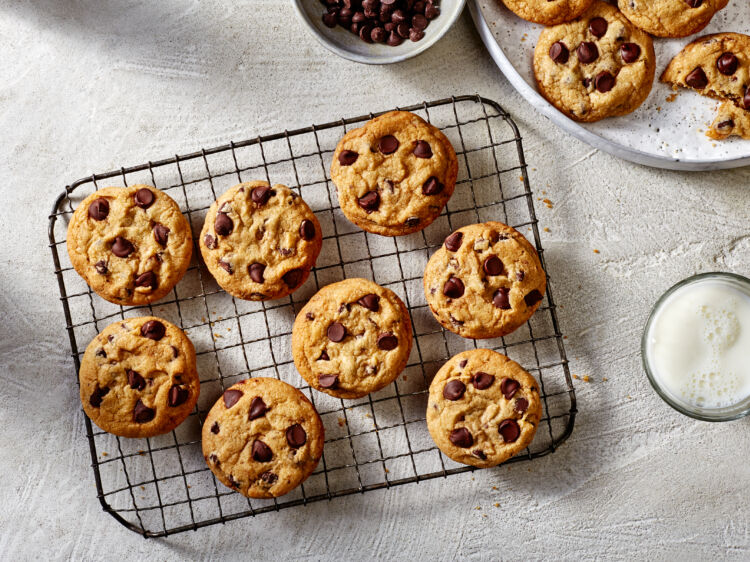
Colour: Most basic cookies are golden brown around the edge and on the bottom. The centre tends to have a light colour for soft and chewy cookies. For crispy cookies, the whole cookie is uniformly golden brown.
Edges: The edge should be set and the centre should look a bit underdone for soft cookies.
Surface: The surface might be cracked, as with crinkle or molasses cookies, or smooth. Shiny and glossy spots are usually signs of underbaking.
Smell: Cookies are done when they release an enticing scent that fills the kitchen; this is caused by the Maillard Reaction.
How do I save failed cookies?
For flat and greasy cookies:
- Crumble them up and use as a topping for ice cream and yogurt.
- Make a cookie crust by adding melted butter to the crumbled cookies to form a crust for cheesecakes or pie bases.
For hardened cookies:
- Place the hardened cookies in an airtight container with a slice of soft bread. The cookies will absorb moisture from the bread and soften after 12–24 hours.
- Use a food processor to turn them into crumbs, which can be used as a base for cheesecake/pie, toppings for ice cream and yogurt, or as a layered dessert in a parfait or trifle.
For cookies that didn't spread:
- If they're thicker than desired, use them as a base for cookie sandwiches with frosting, jam, or ice cream in between.
For burnt cookies:
- Use a knife or a grater to scrape off the burnt bottoms or edges. If the burnt taste isn't too pervasive, the above suggestions are applicable.
For underbaked cookies:
- Put them back in the oven and bake for a few extra minutes to ensure they're fully cooked. Keep a close eye to prevent them from burning. The texture might have been affected by cooling when you initially took them out.
Test a small batch before baking off an entire sheet of cookies. Baking failures can be repurposed into something creative!